



 2026-09-03

In the years before AI swept through data centers, the CPU's dominance faced unprecedented challenges from the GPU — which is, to some extent, understandable.
The reason lies in the fact that the core computations underpinning large-model training and inference are, in essence, massive matrix multiplication and vector operations — precisely the domain where GPUs excel. Compared with CPUs, which are known for low latency and complex logic control, GPUs with tens of thousands of parallel compute cores can complete far more floating-point operations in the same time, quickly making them the undisputed protagonists of the AI computing era.
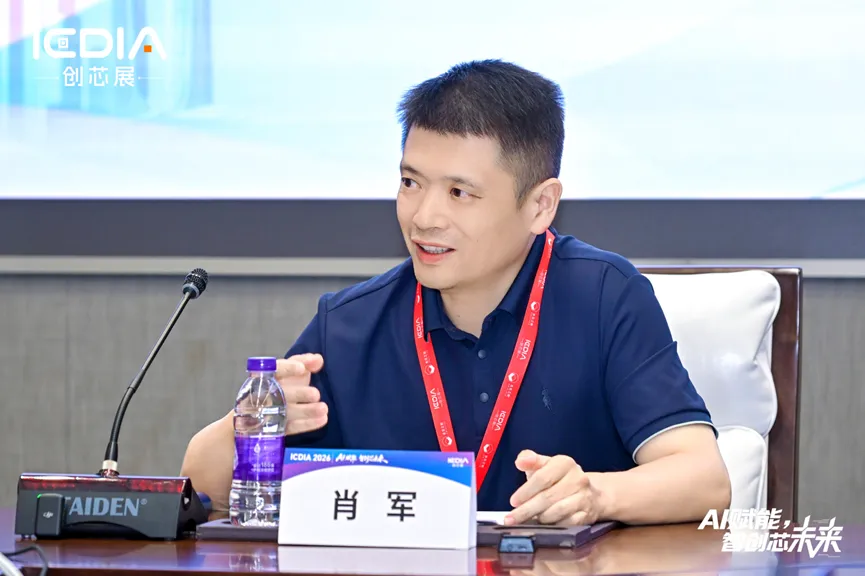
However, with the accelerating arrival of AI inference applications and the deployment of AI agents, CPUs are gradually regaining ground — one of the reasons why CPU-focused startups such as LECARC have gained favor with investors. Xiao Jun, Director of Ecosystem Partnerships at LECARC, stated bluntly in an interview during ICIDA that in the AI era, CPUs hold more opportunities than ever.
CPUs Moving Toward Heterogeneity — An Opening for RISC-V
As is well known, the CPU in computing devices has historically served more as a "general dispatcher," responsible for system control and general-purpose computation. Yet, as the demand landscape has evolved, the advent of agentic AI has introduced an autonomous loop of "perception — cognition — decision — action," transforming AI from single-shot inference into agents that continuously interact and execute. As a result, the demands placed on CPUs have fundamentally changed.
Specifically, within this loop, the CPU is primarily responsible for general-purpose computing tasks such as environment perception, task orchestration, tool invocation, and state management. Its processing latency often accounts for 50%–90% of the entire agent execution pipeline, making it a critical factor in system responsiveness. For this reason, in the agentic AI era, requirements on CPUs have risen significantly: in addition to stronger single-core and multi-core performance, intelligent agents demand higher memory bandwidth, I/O throughput, and low-latency interconnect — further elevating the CPU's importance relative to the traditional cloud-computing era.
Furthermore, Xiao Jun predicted that heterogeneous CPUs featuring dedicated Tensor Processing Units or standalone NPU accelerators will emerge as a rising force in the future, as such processors are well suited to excel in AI inference scenarios.
It is precisely this shift that makes Xiao Jun highly bullish on the future of RISC-V CPUs.
Xiao Jun believes that the core advantage of RISC-V lies not merely in being “open source,” but in the flexibility and scalability enabled by an open ecosystem. Unlike X86’s closed model and ARM’s commercial licensing model, RISC-V adopts an open-source instruction set architecture (ISA) and is modular and customizable, enabling it to cover diverse computing scenarios ranging from IoT and embedded systems to future PCs, servers, and AI computing. He predicts that the three major instruction set architectures will form a tripartite landscape in the future. Although RISC-V currently accounts for less than 1% of the server market, its CAGR of over 30% will make it the fastest-growing technology track.
Based on these observations, LECARC has chosen a strategy of advancing both technology tracks in parallel.
LECARC Advances on Two strategy
According to public information, LECARC was founded in July 2022. Rooted in the mature Arm ecosystem, the company adheres to a differentiated development path of "specialized and refined, specialized and strong," focusing on mid-to-low-end general-purpose servers and edge AI inference servers, and is committed to developing server-grade CPU chips and integrated software-hardware solutions. Riding the wave of surging CPU demand, LECARC recently announced the completion of a Series A financing round of several hundred million RMB.
In the financing announcement, LECARC stated that the proceeds from this round will be systematically invested in three directions: first, accelerating the post-tapeout verification of BlueDot V1 and the small-batch trial commercialization process by the end of 2026; second, initiating the development of its second-generation product; and third, strengthening software-hardware ecosystem adaptation, advancing deep compatibility certification for operating systems, virtualization platforms, and industry middleware to build a trusted server CPU development ecosystem.
According to Xiao Jun, LECARC's first CPU adopts a 24-core design based on the Arm architecture, targeting four application scenarios: mid-to-low-end general-purpose servers, edge AI inference servers, storage servers, and workstations. Built on Arm's high-performance Neoverse V3 cores, the product employs the same generation of CPU cores as Arm's latest AGI CPU, AWS Graviton 5, and Microsoft Cobalt 200, keeping its core architecture at international mainstream levels. In addition, the product supports DDR5-8000 memory, delivering higher memory bandwidth than current mainstream server platforms, and is among the first to support PCIe 6.0, leading in high-speed I/O expansion capability over server products that still commonly adopt PCIe 5.0.
Xiao Jun also noted that the company will simultaneously invest in both Arm and RISC-V. While building its first-generation product, BlueDot V1, on the Neoverse V3 core based on the Arm v9 instruction set — with a focus on strengthening vector computation capability, out-of-order pipeline efficiency, intelligent task scheduling, memory interconnect bandwidth, and energy efficiency — LECARC is also making forward-looking investments in RISC-V CPU architecture innovation, building strategic reserves for the parallel evolution of Arm and RISC-V technology paths to sustain the long-term demand for open-source computing power in mid-to-low-end general-purpose computing and intelligent edge domains.
Xiao Jun explained that LECARC's dual-track strategy of advancing ARM and RISC-V in parallel is essentially a balance between commercial deployment and long-term technology positioning. In his view, ARM currently offers a more mature ecosystem and a stronger performance foundation, enabling rapid commercialization; RISC-V, by contrast, with its open and flexible architectural advantages, holds greater long-term development potential. The company therefore chose to position itself early in preparation for the future computing market.
In his view, the ability to advance on both fronts in this high-barrier market is attributable to the capabilities of the company's team. He believes that large-scale CPU development is a highly complex systems engineering endeavor: from architecture design to each critical module, every stage demands seasoned experts capable of leading independently — talent that typically requires 8 to 10 years, or even over a decade, of R&D experience to cultivate. LECARC's core team is drawn primarily from leading chip companies at home and abroad, giving the company a distinct advantage in senior CPU talent reserves and engineering experience — its most important core competitiveness.
Closing Thoughts
Arm's position in the data center is beyond doubt. Yet Xiao Jun also emphasized that RISC-V CPUs will carve out their own place in the AI arena in the future. He acknowledged, however, that open source is a double-edged sword: for RISC-V to truly enter the AI era, the key lies in avoiding ecosystem fragmentation through unified standards and software-hardware interoperability frameworks, thereby building a complete commercial ecosystem.
"For RISC-V to truly deliver value in the AI era, the key lies in achieving synergistic development with the AI ecosystem," said Xiao Jun. He further noted that to truly bring RISC-V into practice, two core directions deserve attention: first, continuing to uphold open source and leverage the innovation advantages of an open architecture, while remaining vigilant against the risk of ecosystem fragmentation; second, building a standardized software-hardware interoperability platform that connects the full software stack — hardware simulators, CPU/GPU compilers, operating systems, large models, and AI applications — to achieve consistent ecosystem standards.
Xiao Jun stated that only by advancing openness and standards in parallel can RISC-V CPUs hope to gain broader room for growth in AI computing. As a company with ambitious goals, LECARC is going all out toward this objective.
 Previous